Take Charge of Your Health One Weighted Walk at a Time
Rucking is simply walking with weight in a backpack. It is one of the easiest ways to get stronger, improve your fitness and feel more capable.
Your Weight. Your Pace. Your Progress.
You Already Know How
Walking Works. Rucking Makes It Stronger.
Put some weight in a backpack, step outside and walk. That simple change turns an ordinary walk into a practical, full-body workout.
The added weight makes your legs, core, back, shoulders, heart and lungs work harder while keeping the movement natural and familiar.
You do not need a gym membership, expensive equipment or a complicated training program. You do not even need to be in shape before you begin.
Start where you are. Carry what you can. Build gradually.
More Than Exercise
Build Your Strength—and Your Confidence
Fitness is not only about how you look. It changes how you feel about yourself and what you believe you can do.
Rucking gives every walk a purpose. It gets you outside, challenges your body and gives you time to clear your mind.
A quiet walk through nature, with your thoughts or your favourite music, can be one of the simplest ways to release stress and leave the pressures of the day behind.
As the weight becomes easier and the distance becomes longer, you begin to notice something important: you are becoming stronger.
You feel healthier, more capable and more confident. You begin taking pride in what your body can accomplish—and that feeling can carry into every part of your life.
Stronger Body. Clearer Mind. Greater Confidence.
You Are in Control
Any Age. Any Fitness Level. Your Challenge.
Rucking meets you where you are today and grows with you.
You do not have to be young, fast or naturally athletic. You do not have to prove how tough you are by carrying too much weight.
Rucking is about steady improvement—not competition.
Add a little more distance, weight or difficulty when you are ready. Small improvements become meaningful change when you keep going.
Why People Ruck
Simple Fitness With Real-Life Benefits
Rucking combines walking and carrying to develop useful, practical fitness.
Get Stronger
Train your legs, core, back and shoulders while doing something as natural as walking.
Improve Your Fitness
Challenge your heart and lungs without needing to run or turn exercise into punishment.
Manage Your Weight
Make your regular walks more demanding and burn more energy with every step.
Clear Your Mind
Walk outdoors, listen to music, leave your screen behind and give yourself room to think.
Build Confidence
See yourself become stronger, more capable and ready to take on greater challenges.
Prepare for Real Life
Build useful strength and endurance for work, family, travel, hiking and everyday life.
Start Where You Are
It Is Never Too Late to Become Stronger
Many people believe fitness has passed them by. They think they are too old, too busy, too tired or too far out of shape to begin again.
That is not true.
You can begin with a light backpack and a short walk. You can move slowly and build gradually. Every walk still matters, no matter your age or starting point.
Rucking Canada exists to remind Canadians that they are not finished. You can still improve your health. You can still become stronger. You can still feel better about yourself.
Your age does not decide what you can become. You do.
Start Simple
How to Start Rucking
You do not need perfect gear or an advanced training plan. You can start with a backpack you already own.
Add Some Weight
Put 5–10 pounds in a comfortable backpack. Use less if needed and secure the weight so it cannot shift around.
Go for a Walk
Begin with 20–30 minutes around your neighbourhood, local park or a familiar trail.
Build Gradually
Ruck once or twice per week. Slowly add distance, hills or weight as your body adapts.
Your First Ruck Can Be This Simple
✓ Weight: 5–10 pounds
✓ Time: 20–30 minutes
✓ Frequency: Once or twice per week
✓ Pace: Comfortable and steady
Start lighter than you think. Stop if you experience sharp pain, numbness or unusual joint or back pain. Speak with a qualified health professional if you have medical concerns or previous injuries.
Already Rucking?
Your Ruck Can Grow With You
Once basic rucking becomes comfortable, you can turn your walk into a more complete outdoor workout.
Add Distance or Hills
Walk farther, choose a hillier route or explore more challenging trails.
Increase Weight Slowly
Add weight in small amounts only after your current load feels comfortable and controlled.
Carry Light Dumbbells
Carry light dumbbells to strengthen your arms while you walk. A controlled arm swing can also help you maintain rhythm and forward momentum.
Add Exercise Stops
Stop for controlled push-ups, presses, curls, rows or other exercises you choose, then continue your ruck.
Start With a Walk. Build It Into Your Workout.
The Future Vision
The Get Rucking Canada Experience
We want Canadians to experience rucking for themselves—not simply read about it.
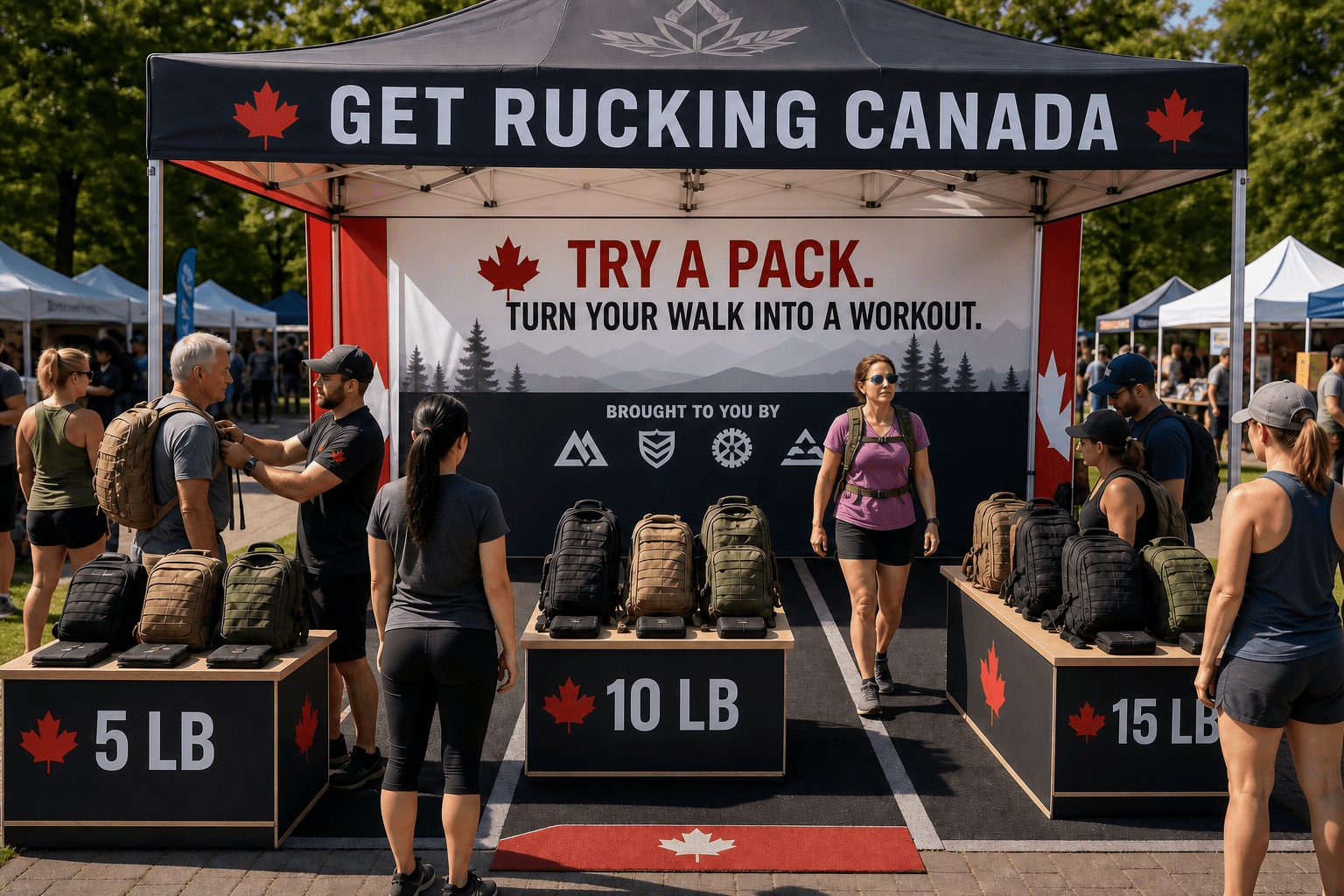
Try a Pack. Turn Your Walk Into a Workout.
Our vision is to bring Rucking Canada to fitness, outdoor and community events across the country.
Visitors will be able to try a properly fitted backpack, choose a comfortable starting weight and discover how quickly an ordinary walk can become a real workout.
We will help people position the weight high and close to the body, adjust the shoulder and chest straps, stand tall and walk with a controlled, comfortable posture.
The goal is simple: give Canadians the opportunity to try rucking and discover that becoming stronger may be easier than they thought.
Get Rucking Canada
A Movement for Ordinary Canadians
Rucking Canada exists to introduce Canadians to one of the simplest ways to become stronger, healthier and more confident.
This is not an elite fitness club. It is not a race, military test or competition.
It is a nationwide movement for ordinary people who are ready to stop waiting, step outside and take charge of their health.
Ruck alone. Walk with a friend. Bring your family. Introduce someone else to rucking or start a group in your community.
We want to see Canadians rucking in every province, every town, every city, every park, every trail and every neighbourhood.
Progress matters more than perfection. The important thing is that you begin.
Your Weight. Your Pace. Your Progress.
You do not have to change your entire life today. Put some weight in a backpack, walk out the door and take the first step.